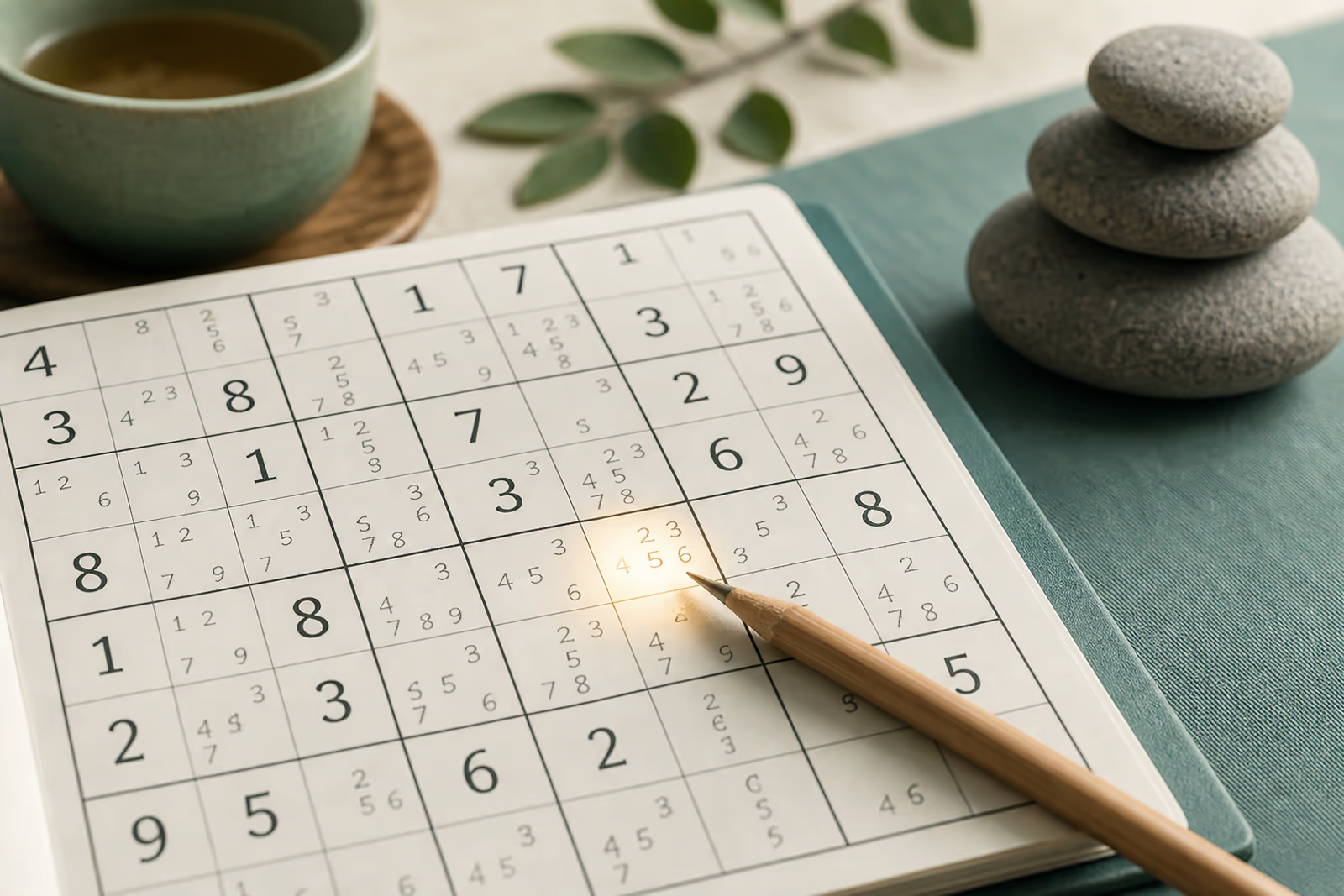
The Focus of Puzzles: Sudoku as Active Meditation
Most people open Sudoku to "kill a few minutes." The better reason is quieter: a finished grid gives your attention a clean landing place. Unlike endless scrolling, every move either follows a rule or it does not. That constraint is what makes Sudoku feel like active meditation — focus with a scoreboard.
Attention is a muscle. A puzzle is a gentle gym for it.
Why logic puzzles calm a busy mind
Your brain loves unfinished loops — open tabs, unread messages, half-written emails. A Sudoku board is a closed loop. Digits 1–9, nine boxes, no ambiguity about the win condition. When you narrow candidates in a row, you are practicing selective attention: holding one question, ignoring the rest, then releasing it when the cell is filled. That cycle is close to mindfulness without asking you to empty your thoughts on cue.
A five-minute focus ritual
- Pick one difficulty and stick to it. Easy or Medium is enough for a reset. Jumping to Expert when you are tired turns focus practice into frustration practice.
- Silence one channel of noise. Mute notifications or put the phone face-down. The grid should be the only thing asking for a decision.
- Scan the whole board before placing. Spend thirty seconds looking for an obvious digit. The pause is the meditation — not the speed of filling cells.
- Stop on a clean edge. Finish the puzzle or stop after one technique (for example, a single Hidden Single). A deliberate ending beats doom-scrolling into the next game.
Example: a five-minute attention reset
Use a comfortable Easy or Medium puzzle and treat the session as a bounded attention exercise. The goal is not to finish at record speed. It is to notice one logical signal, make one justified move, and return to the board whenever the mind wanders.
- Set one quiet boundary. Silence notifications and set a five-minute timer. A short, protected interval is easier to repeat than an open-ended promise to “relax.”
- Name the current task. Choose a single scan such as “find where 6 can go in each box.” When attention drifts, return to that exact question instead of judging the distraction.
- End deliberately. When the timer ends, finish the current logical step, save the puzzle, and stop. A clear ending helps the exercise remain restorative rather than compulsive.
Common focus-practice mistakes
Turning calm into a speed test
A personal best can be motivating, but watching the clock every few seconds divides attention. Hide or ignore the timer during a reset session.
Choosing frustration on purpose
An Expert grid is not automatically a better workout. Use a level that keeps you reasoning steadily without repeated guessing or irritation.
Keeping every interruption available
Sudoku cannot provide a clean attention loop while messages and alerts keep reopening other loops. Remove one source of interruption first.
A focused practice checklist
- Choose a consistent cue, such as after coffee or before closing the laptop.
- Use one scan at a time: one digit, one row, or one 3×3 box.
- Stop after the planned interval and briefly notice whether your attention feels steadier.
If you want a daily cue, open the Sudoku Hot daily challenge at the same time each day. Same ritual, new grid — a small island of logic between meetings or before sleep.
Sudoku and focus FAQ
Is Sudoku the same as meditation?
No. Sudoku is a structured concentration activity, while meditation includes many distinct practices. It can be a useful quiet routine, but it is not a medical treatment or a replacement for professional care.
How long should a focus session last?
Five to fifteen minutes is enough to build a repeatable pause. Choose a duration that fits your day instead of extending the session until it becomes another obligation.
Which difficulty is best for a calm session?
Use a level where you can make regular logical progress. Easy and Medium work well for many people; the right level is the one that holds attention without creating strain.