How to Solve Sudoku Without Guessing
Guessing feels productive because it puts a number on the board, but it replaces one puzzle with two uncertain branches. A sound Sudoku can be approached as a chain of verifiable deductions: each placement or candidate removal follows from the row, column, box, or a recognized pattern. Solving without guessing does not mean every move is obvious. It means you separate possibilities from commitments, keep candidates accurate, and change techniques when the current scan stops producing information.
A candidate is a possibility. A placed digit is a conclusion. Never confuse the two.
What counts as guessing?
Guessing means committing to a digit without a logical proof, often with the plan to undo it if a contradiction appears. Candidate notes are not guesses: they record every value still allowed by known constraints. Advanced eliminations are not guesses either when their pattern is valid. For example, an X-Wing may not tell you where a digit goes, but it proves where that digit cannot go. The practical test is simple: before changing the grid, can you state a rule that remains true in every possible completion?
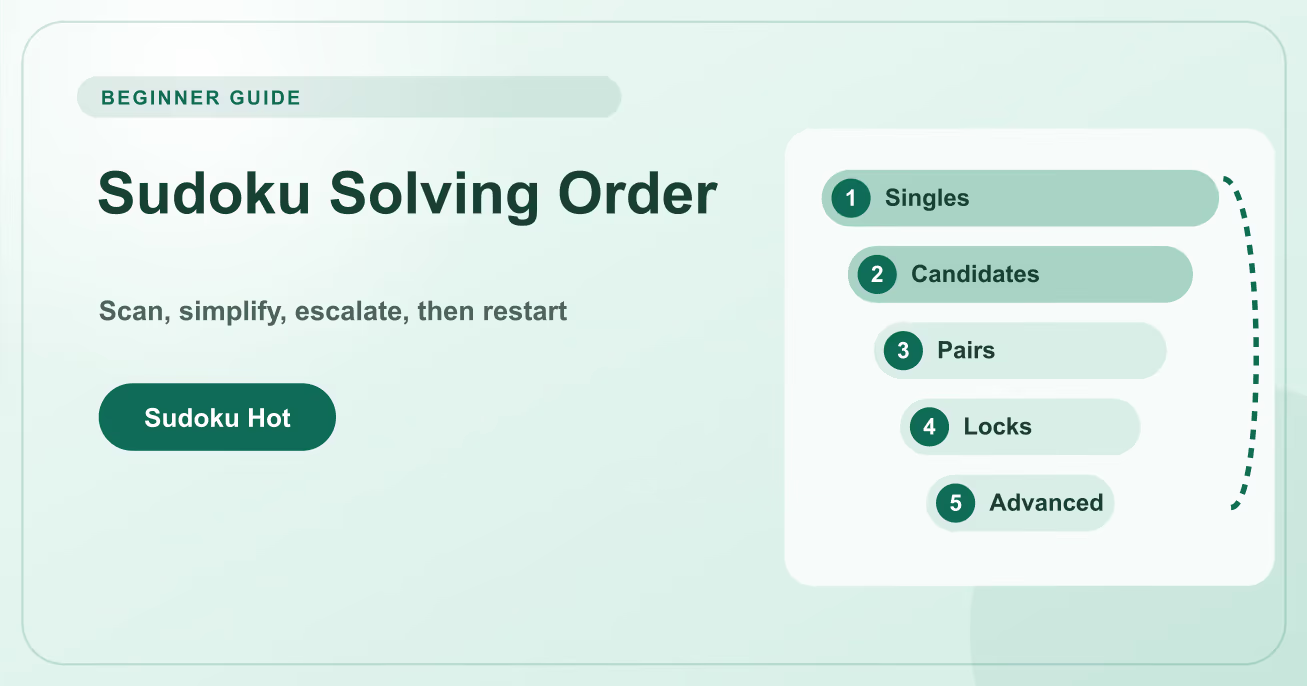
A repeatable no-guessing workflow
- Scan for direct placements. Start with Naked Singles and Hidden Singles in crowded rows, columns, and boxes. Recheck the units touched by every new placement.
- Build honest candidate lists. When direct scanning stalls, note the digits allowed by all three constraints. Remove stale notes immediately after every placement.
- Search in a fixed technique order. Try pairs, Locked Candidates, triples, and fish patterns only after easier deductions are exhausted. A stable order keeps you from randomly hunting the whole grid.
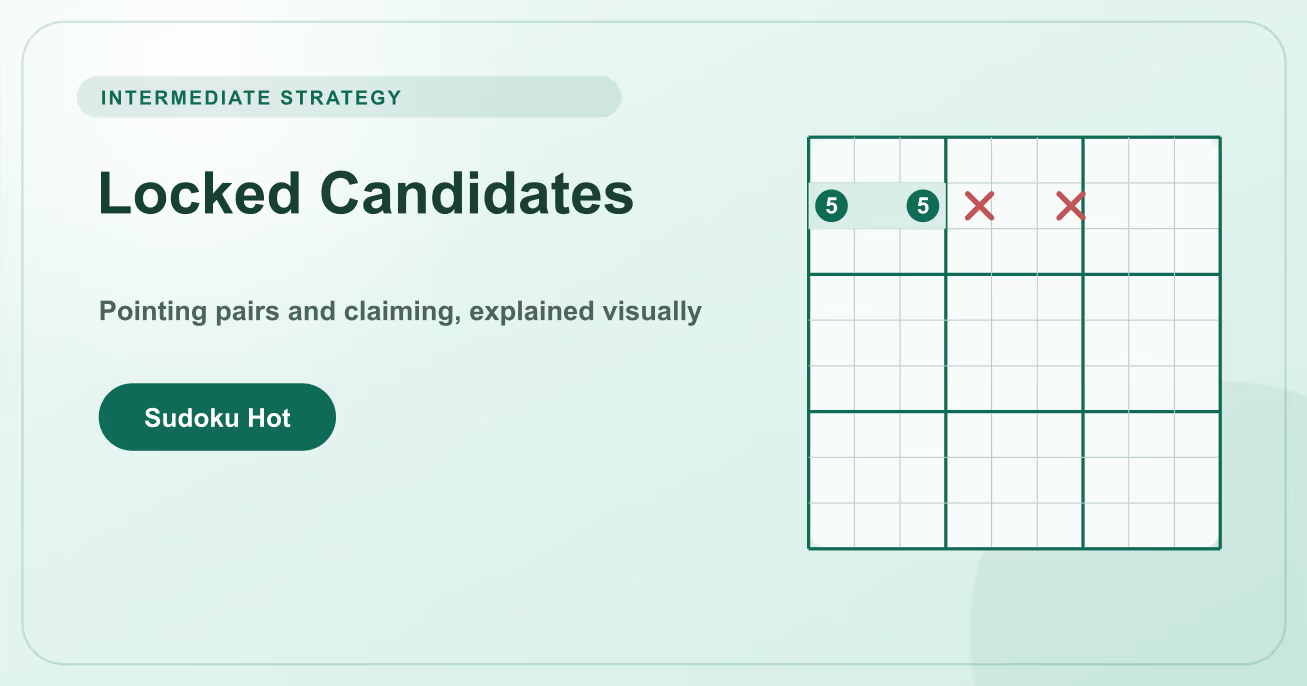
- Require a verbal proof. State the source and consequence: “5 is locked to row 2 inside this box, so 5 cannot appear elsewhere in row 2.” If the sentence is vague, do not delete the candidate.
- Reset your view when stuck. Verify notes, switch the candidate digit or unit you are scanning, and revisit singles. Do not turn frustration into an unsupported placement.
Worked example: replacing a two-way guess with logic
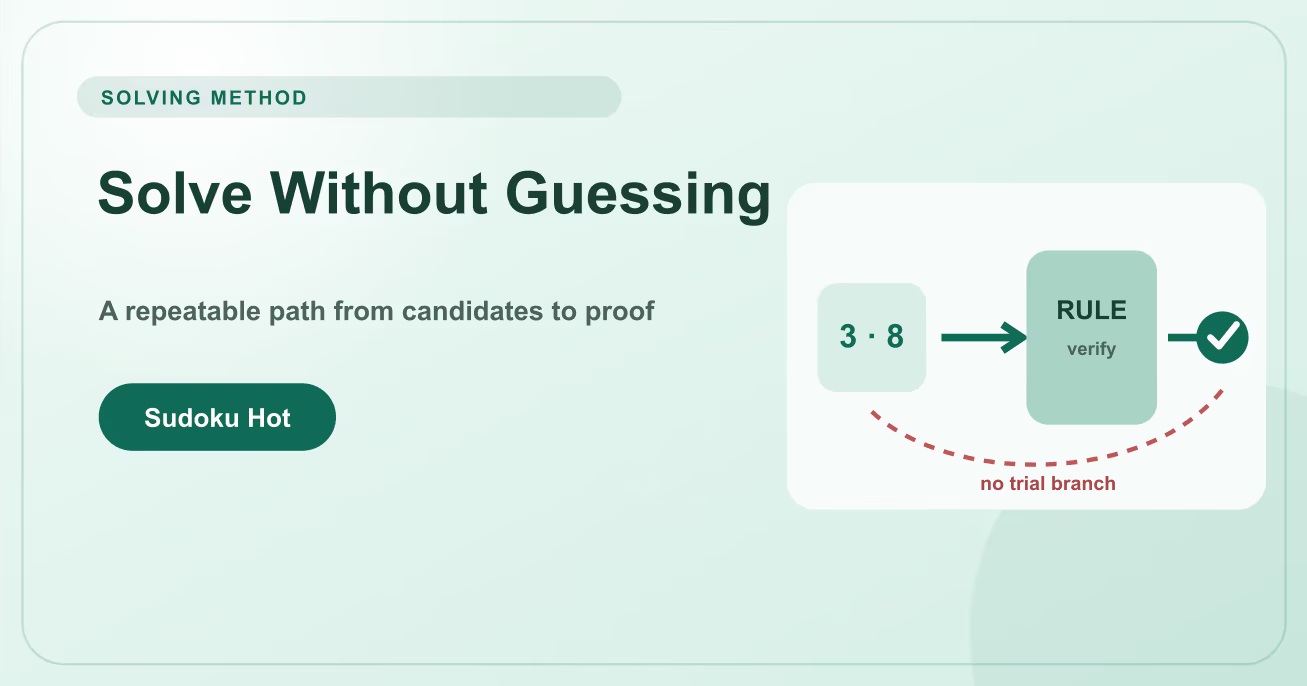
Suppose r6c4 contains candidates {3,8}. Choosing 3 would be a guess because both values still obey the immediate row, column, and box rules. Instead of branching, inspect where 3 and 8 occur across the related units and search for a pattern that removes one candidate.
- Do not place either candidate. Leave {3,8} as a note. The absence of an immediate duplicate is not proof that one branch is correct; contradictions may appear many moves later.
- Inspect the box positions. If every 3 in the box lies in row 6, the box points to row 6. Remove 3 from other row-6 cells outside the box using Locked Candidates.
- Propagate the elimination. Suppose r6c9 changes from {3,5} to {5}. Place 5, then update row 6, column 9, and its box. That new digit may remove 8 from a peer of r6c4.
- Return only when justified. If later logic removes 8 from r6c4, place 3 and record the reason. The same final value is now a conclusion rather than a branch you happened to test first.
Habits that disguise guessing
Calling a plausible digit “obvious”
A value may fit the current row, column, and box while still being wrong. “It looks right” is not a rule; identify the single, subset, or pattern that forces it.
Using contradictions without tracking branches
Trial branches can become long and error-prone. If you are learning logical solving, avoid them so the technique that the puzzle is teaching remains visible.
Trusting stale candidates
A valid advanced pattern built from outdated notes is not valid. Recheck the candidate cells against placed digits before making a high-impact elimination.
No-guessing practice checklist
- Before every placement, name whether it is a Naked Single, Hidden Single, or the consequence of a specific elimination.
- Use notes for unresolved possibilities and reserve large digits for values proved by logic.
- When stuck for two minutes, audit one row, one column, and one box instead of testing a candidate.
- After using Undo, find the exact unsupported step and restore the candidate logic rather than trying the other branch.
The cure for guessing is not more caution around one cell; it is a better process for the whole board. Use a fixed scan, maintain candidates, demand a reason, and reset your viewpoint when progress stops. Start with Medium or Hard Classic puzzles where the required techniques are visible enough to practice but varied enough to make the no-guessing loop meaningful.
Solving without guessing FAQ
Can every valid Sudoku be solved without guessing?
A properly constructed puzzle is intended to have one solution, but the required logical methods can exceed a human solver’s current toolkit. In practice, published difficulty levels aim to match a known set of techniques.
Is using a hint the same as guessing?
No. A useful hint identifies a logically supported move. Treat it as instruction: name the technique, verify why it works, and look for the same pattern later in the solve.
Are candidate notes allowed in logical solving?
Yes. Candidates are a representation of remaining possibilities. The key is to enter and remove them according to constraints rather than using them as tentative final answers.
What should I do if no known technique works?
First audit notes and rescan for singles. Then compare the puzzle difficulty with your technique set. Studying the next method is more valuable than making an unexplained commitment.
Does backtracking count as a valid solving algorithm?
Yes for software and solution verification. This guide focuses on human logical solving, where the goal is to explain each deduction and learn the structure of the puzzle.